A drafting lamp has a deceptively difficult job. It must throw enough light across a drawing surface without creating a bright hotspot, crowding the desk, or leaving the far edge of a plan in shadow. A student working on an apartment desk may need a compact USB lamp, while someone drawing large layouts or building models may prefer a tall overhead bar with broad coverage. Clamp lamps save valuable workspace, but a base-mounted model can be easier to reposition.
The biggest buying traps are easy to miss. A long arm does not automatically mean wide illumination, and a bright lamp can still feel awkward if its head cannot be aimed away from your eyes. Pay attention to reach, mounting style, control method, color settings, bulb replacement, desk compatibility, and whether the lamp covers a small sketchbook or a broad drafting area. Our top overall pick is the Pzloz LED Desk Lamp because it combines broad adjustment with five color temperatures, five brightness levels, and remote control convenience.
Different buyers will rank those features differently. A traditional architect lamp may be preferable for simple directional light, while a wide overhead bar makes more sense for large drawings or dual-monitor work. The comparison below gives you a fast way to sort through those trade-offs.
Best Drafting Lamps Comparison Table
| Product | Best For | Mounting | Lighting Control | Key Feature |
|---|---|---|---|---|
| Pzloz LED Desk Lamp | Best overall | Clamp | 5 colors, 5 brightness levels | Remote control and 25 combinations |
| Omorepa 36W Architect Desk Lamp | Large drafting surfaces | Desk base | Dimmable, adjustable color | 47.4-inch wide bar and 3000 lumens |
| 3000 Lumen Architect Desk Lamp | Dual monitors and broad work areas | Clamp | 5 colors, 5 brightness levels | Seven flexible joints and sensor |
| LED Desk Lamp With Clamp, 4CCT | Drawing and craft work | Clamp | 10% to 100%, 3000K to 5700K | Dual light sources and high CRI claim |
| UPLIFTDESK E7 LED Desk Lamp | Modern workstations | Clamp | 3 colors, dimmable | Aluminum frame and 2.25-inch clamp |
| DXOVEEN LED Clamp Lamp | Replaceable-bulb flexibility | Clamp | Bulb-based | 34.5-inch swing arm and E26/E27 socket |
| Bostitch Office VLF100 | Simple directional lighting | Clamp | Bulb-based | 36-inch reach and replaceable LED bulb |
| SKYLEO Desk Lamp | Small desks and study spaces | Desk lamp | 5 colors, 11 brightness levels | USB power and 45-minute timer |
| Globe Electric 56963 | Traditional architect-lamp style | Clamp | Separate E26 bulb | 31.5-inch multi-joint arm |
For a closer look, the reviews below explain how each lamp handles reach, coverage, controls, and the practical limits of its design.
1. Pzloz LED Desk Lamp for Office Home Best Overall

The Pzloz earns the top spot because it gives a drafting desk the kind of control that becomes useful after the first few late-night drawing sessions. Its five color temperatures run from 3000K to 5500K, while five brightness levels create 25 combinations for reading, drawing, computer work, or a softer evening setting. A wireless remote means you can change the light without reaching across a sheet of paper and nudging the lamp out of position.
Its physical adjustment is equally practical. The standing arm rotates 360 degrees, the swing arms fold through 180 degrees, and the lamp head rotates 270 degrees. That range should help a student aim light around a model or let a home-office user move illumination away from a monitor. The listing also describes night and reading modes, plus illumination intended to be glare-free and flicker-free. Buyers who want a flexible task lamp rather than a single-purpose bulb fixture get the broadest feature set here, though the electronic controls require more setup than a simple rotary switch.
Pros
- Offers five color temperatures from 3000K to 5500K.
- Provides five brightness levels and 25 lighting combinations.
- Includes a wireless remote control for convenient adjustments.
- Has a 360-degree standing adjustment, 180-degree folding arms, and a 270-degree rotating head.
- Includes reading and night-light modes for work beyond drafting.
Cons
- The electronic controls and remote add more complexity than a basic bulb lamp.
- Remote operation depends on keeping the remote available and functional.
This is the strongest fit for someone who switches between technical drawing, screen work, sewing, and general reading at one desk. It makes especially good sense for a shared workspace where warm light in the evening and cooler task light during the day are both useful. Buyers who prefer replaceable bulbs or a purely mechanical lamp may find its feature-rich design more than they need.
To buy this product, click here.
2. Omorepa 36W 3000LM Ultra Bright Architect Desk Lamp Best for Large Drafting Areas

Large drawings expose the weakness of a small desk lamp quickly. One corner looks crisp while the opposite side fades into a gray puddle, and shifting the lamp every few minutes becomes a nuisance. The Omorepa addresses that problem with a three-section light bar listed at 47.4 inches wide, a 36W LED system, and a stated output of 3000 lumens. Its 25.4-inch main lamp head rotates 180 degrees, giving the broad bar room to aim across a substantial desktop.
This model uses a solid metal base instead of a clamp, so desk thickness and rear clearance are less restrictive. That arrangement suits a drafting table that moves around the room or a workbench where a clamp would interfere with shelves. Touch controls and a remote handle brightness and color settings, while the memory function saves a preferred setup. The ambient light sensor is a useful extra for a room that shifts from daylight to warm evening light, but the wide head and base demand more physical space than a compact clamp lamp.
Pros
- Provides a stated 47.4-inch adjustable light-bar width.
- Lists 3000 lumens and a 36W LED system for broad illumination.
- Uses a stable desk base instead of requiring a suitable clamp edge.
- Includes touch controls, remote control, memory function, and an ambient light sensor.
- Offers five joints and a 180-degree rotating main lamp head.
Cons
- The broad light bar and base occupy more desk space than compact lamps.
- A base-mounted design may be less convenient for very small desks.
The Omorepa is the sensible pick for broad plans, model-making, painting, or a desk shared by several people. Someone working on a small pad may see little benefit from its long bar, while a large drafting surface can take advantage of the coverage without constant repositioning. Check the available depth and placement area before buying, then this lamp becomes a particularly capable room-scale task light.
To buy this product, click here.
3. 3000 Lumen Ultra Bright Architect Desk Lamp With Clamp Best for Dual Monitors

For a desk covered by two monitors, a notebook, and a drawing pad, a short lamp arm can feel like a coat hook in a crowded hallway. This 3000-lumen architect lamp is built around a 47.4-inch-long light bar and a stated working height of 29.9 inches. Its clamp mounting keeps the base off the work surface, while seven rotating joints allow the lamp to be raised, lowered, or angled around screens.
The bilateral auxiliary light bars are a distinctive touch. Aim them downward for concentrated work or upward for softer ambient illumination, depending on whether you are tracing a detail or typing beside the drawing. Five brightness levels and five color-temperature modes provide useful variation, and the lamp includes touch and remote controls. The smart sensor can adjust brightness based on surrounding light according to the listing. This is a highly adjustable arrangement, but buyers with a narrow desk edge should verify that the clamp location can support the tall, extended design.
Pros
- Lists 3000 lumens and a 36W LED system.
- Uses seven rotatable joints for broad positioning control.
- Offers a 47.4-inch light-bar length and 29.9-inch adjustable height.
- Includes five brightness levels and five color-temperature modes.
- Auxiliary bars can point upward for ambient light or downward for task lighting.
Cons
- The tall, wide structure needs adequate clearance around monitors and shelves.
- Its many joints and electronic controls may feel excessive for a small single-sheet workspace.
Choose this lamp for a large computer-and-drawing station where lighting must stretch around equipment. It has more range than a conventional spring-arm lamp and is better suited to people who frequently change the arrangement of their desk. A compact student setup may be happier with a smaller lamp, but a dual-monitor workstation can make full use of the overhead reach.
To buy this product, click here.
4. LED Desk Lamp With Clamp, 4CCT Table Lights Best for Drawing and Crafts

Drafting, painting, puzzles, and sewing all benefit from light that reaches beyond a narrow central circle. This clamp lamp uses dual light sources and is listed as covering a workbench up to 71 inches wide. The listing also states a CRI of 95 or higher, a specification that may appeal to artists and anyone who needs colors to appear more faithfully under the lamp. Seven rotating parts and a 270-degree lamp arm give it plenty of direction changes for a busy work surface.
Brightness adjusts continuously from 10% to 100%, and color temperature ranges from 3000K to 5700K. A remote adds control from across the desk, while memory, reading, night-light, and timer functions reduce the small annoyances that can pile up during long projects. Its clamp fits desks up to 2 inches thick according to the listing. That limit matters in a thick workbench or substantial drafting table, so measure the edge before choosing this model over a base lamp.
Pros
- Uses dual light sources for broad desktop coverage.
- Lists coverage of work surfaces up to 71 inches wide.
- Provides stepless brightness adjustment from 10% to 100%.
- Offers a 3000K to 5700K color-temperature range.
- Includes seven rotating parts, remote control, memory, and timer functions.
Cons
- The clamp is listed for surfaces up to 2 inches thick, which may exclude some heavy workbenches.
- Its broad dual-source design may be more lamp than a small personal desk requires.
This model fits makers who move between drafting paper, paint, fabric, and small components. It is particularly attractive for a long bench where a single shade leaves the edges dim. Shoppers with a thin desk and wide project area should find the clamp convenient, while anyone with a thick rear edge should verify fit before ordering.
To buy this product, click here.
5. UPLIFTDESK E7 LED Desk Lamp With Clamp Best Premium Compact Design
The UPLIFTDESK E7 takes a cleaner, more modern approach than the exposed-spring architect lamps farther down this list. Its aluminum frame uses swivel joints, and the clamp is specified for surfaces up to 2.25 inches thick. That makes it a strong match for a standing desk, dual-monitor setup, or contemporary drafting station where a bulky base would steal useful room.
Three color options, 3000K, 4000K, and 5000K, cover warm evening light, neutral work light, and a cooler setting for alert task work. The LED panel dims through a press-and-hold control, and the listing describes diffused light intended to reduce flicker, glare, and ghosting. The stated 50,000-hour lifespan is a manufacturer specification rather than a guarantee of individual service life, but it helps explain the lamp’s premium positioning. Buyers who need dozens of color modes may prefer a more feature-heavy model, while those who value a tidy frame may appreciate its restraint.
Pros
- Uses a high-grade aluminum frame with a sleek black finish.
- Clamp accommodates surfaces up to 2.25 inches thick according to the listing.
- Provides 3000K, 4000K, and 5000K color choices.
- Offers dimming through a press-and-hold control.
- Fits standing desks, traditional workstations, dual monitors, and precision tasks.
Cons
- Provides three color modes rather than the wider ranges offered by several electronic lamps here.
- The clamp and aluminum design carry a higher price position than basic bulb lamps.
The E7 is aimed at buyers who want a refined permanent fixture for a modern desk. It works best where clean lines, clamp mounting, and straightforward controls matter more than remote operation or a large number of presets. A student who needs maximum versatility on a tight budget may get more practical value elsewhere, but a long-term home-office setup can suit this design well.
To buy this product, click here.
6. DXOVEEN LED Clamp on Desk Lamp Best Replaceable-Bulb Option

There is something reassuring about a lamp that works like a familiar tool. The DXOVEEN uses an E26/E27 socket and includes an A19 bulb, so the light source can be replaced rather than treating the entire fixture as one sealed unit. Its foldable swing arm extends to 34.5 inches, giving a drafting desk enough reach to clear a monitor or move toward the far side of a sheet.
The all-metal construction suits a workshop, studio, or home office that favors a traditional architect-lamp look. The shade tilts up and down, and the listing describes a tightening mechanism to help hold the chosen angle. A protective rubber contact point on the clamp is intended to reduce scratching, while the 60-inch cord provides useful placement flexibility. This lamp does not provide built-in color-temperature presets or remote operation, so its appeal lies in direct positioning and bulb choice rather than electronic customization.
Pros
- Includes an A19 bulb and uses a replaceable E26/E27 socket.
- Provides a 34.5-inch foldable swing-arm reach.
- Uses an all-metal construction according to the listing.
- Has an adjustable shade with a tightening mechanism.
- Includes a 60-inch power cord and protective rubber contact point.
Cons
- Does not provide built-in color-temperature or brightness presets.
- Its directional shade covers a narrower area than wide overhead light bars.
Pick the DXOVEEN if you want the ability to change bulbs and control the light source yourself. It is a practical companion for focused line work, reading, or a small model-making area, especially where a simple switch-and-shade arrangement feels preferable. Buyers wanting broad, even coverage across a very large drawing should look toward the wide-bar options instead.
To buy this product, click here.
7. Bostitch Office VLF100 LED Swing Arm Desk Lamp Best Budget Directional Lamp
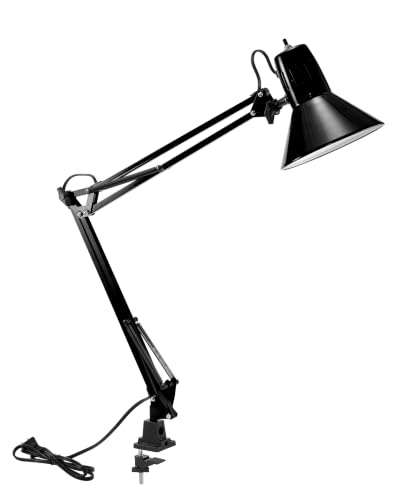
The Bostitch VLF100 keeps the formula refreshingly straightforward. It has a clamp mount, an all-metal construction, a replaceable LED bulb, and a 36-inch reach. For someone setting up a first drafting corner in a dorm or spare bedroom, that combination covers the practical basics without filling the desk with a wide light bar or a heavy base.
Its fully adjustable swing arm is intended for focused directional light, and the listing describes a light zone free of shadows, halos, and troublesome glare. That language should be read as a product claim rather than a guarantee for every workspace, since paper position, wall color, and surrounding light still affect the result. The replaceable bulb is useful over time, but the lamp lacks the color modes, remote control, and memory features found on more advanced LED fixtures.
Pros
- Includes a clamp mount for space-saving placement.
- Provides a listed 36-inch reach.
- Uses an all-metal construction.
- Includes a replaceable LED bulb.
- Offers adjustable directional lighting for focused tasks.
Cons
- Has fewer lighting controls than multi-mode LED lamps.
- Directional coverage may be less suitable for large drawings than a wide light bar.
This is the sensible budget pick for a small or medium desk where a single bright working area is enough. It can suit drafting students, hobbyists, and readers who value simple setup over elaborate controls. Choose a broader lamp if your drawing routinely extends well beyond the center of the desk, since the VLF100 is built around direction rather than room-filling coverage.
To buy this product, click here.
8. SKYLEO Desk Lamp for Home Office Best for Small Desks
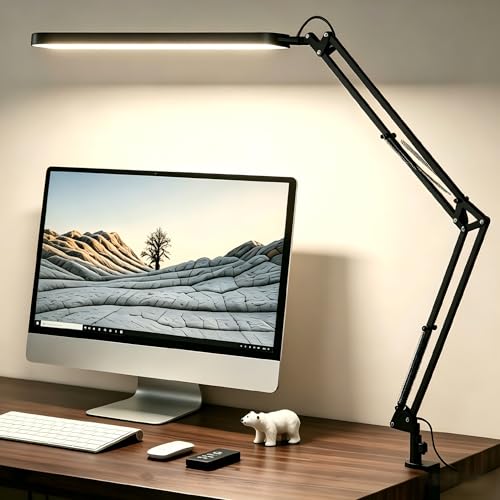
A small desk often has to serve as a drafting station, charging shelf, and study area at the same time. The SKYLEO takes up less commitment than a tall architect lamp and uses USB power, which lets it connect to a laptop, power bank, or USB adapter. That flexibility can be handy for a student who moves between a bedroom desk, library table, and temporary work surface.
The lamp includes five color modes and 11 brightness levels, giving more adjustment than a basic single-bulb fixture. Its swing arm and rotatable head help aim light around a notebook or drawing pad, while the memory function recalls the last setting. A 45-minute timer is a thoughtful addition for reading or late-night study. USB power is convenient, but buyers should make sure their chosen power source is positioned close enough and provides a suitable connection.
Pros
- Uses USB power with laptops, power banks, or USB adapters.
- Provides five color modes and 11 brightness levels.
- Includes a memory function for repeated work sessions.
- Has an adjustable swing arm and rotatable lamp head.
- Includes a 45-minute timer for reading and study use.
Cons
- USB power may be less convenient where a nearby adapter or powered port is unavailable.
- Its compact format is better suited to small work areas than broad drafting tables.
The SKYLEO makes sense for a modest workspace, sketchbook, or laptop-side drawing setup. It is easy to imagine on a dorm desk where every inch matters and the lamp may need to travel with the user. Large-format drafters should choose a longer overhead lamp, but buyers who want many settings in a compact package may find this model unusually practical.
To buy this product, click here.
9. Globe Electric 56963 31.5-Inch Multi-Joint Desk Lamp Best Traditional Architect Style

The Globe Electric 56963 looks at home beside a drafting board, a stack of tracing paper, or a college workstation. Its black metal design uses a 31.5-inch multi-joint arm and a clamp that fits surfaces up to 2 inches wide according to the listing. The shade includes a rotary on/off switch, so starting a work session takes a quick turn rather than a search for a cord button or remote.
This is a fixture for buyers who already know what bulb they want. It accepts an E26 medium-base bulb up to 60W and is compatible with LED, incandescent, and halogen bulbs according to the product information, with the bulb sold separately. That replaceable-bulb approach allows future changes in brightness or color, but it also means a separate purchase before the lamp is ready to work. The spring-loaded upper arm offers useful positioning, although the listing describes the swing arm as partially adjustable rather than presenting the broad electronic range of the newer LED models.
Pros
- Uses a classic black metal architect-lamp design.
- Includes a multi-joint arm with a listed 31.5-inch length.
- Clamps to surfaces up to 2 inches wide according to the listing.
- Uses a convenient rotary switch on the lamp shade.
- Accepts replaceable E26 bulbs up to 60W and supports several bulb types.
Cons
- The required bulb is sold separately.
- Offers less built-in adjustability than the multi-mode LED lamps in this roundup.
This Globe Electric model suits a traditional drafting setup where tactile controls and replaceable bulbs matter more than remote presets. It is a good match for someone who wants to choose a preferred E26 LED bulb and keep the fixture visually simple. Buyers seeking maximum coverage, automatic brightness changes, or a ready-to-use integrated LED system should select a different design.
To buy this product, click here.
Buying Guide for Best Drafting Lamps
Match the Lamp to the Drawing Area
Start with the part of the desk that needs illumination, not the lamp’s tallest advertised measurement. A 31.5-inch or 36-inch swing arm can work well for a centered sketchbook, while a wide light bar makes more sense for a long drafting surface, a model-making bench, or a desk shared by a drawing pad and two monitors. A lamp can reach far without spreading light evenly, so look for dual sources or a broad head if the paper extends toward both sides.
For a student drawing on letter-size or tabloid paper, a compact clamp lamp may leave more room for rulers, pencils, and a cutting mat. A large-format planner may need overhead coverage instead. Place a sheet of paper on the desk and mark its edges with removable tape. That simple outline shows whether the lamp’s useful reach matches the area where your hand actually works.
Choose Clamp or Base Mounting
Clamp lamps keep the base away from the drawing surface, which is valuable when rulers, tools, and reference books already form a small mountain around the work. They need a compatible desk edge, though. The products here list clamp limits ranging from 2 inches to 2.25 inches, and shelves, rear lips, cable trays, or thick tabletops can interfere with installation.
A base-mounted model such as the Omorepa avoids those edge restrictions and can move from one table to another. The trade-off is a larger footprint. Leave room for the base before deciding that a wide lamp will fit beside your paper, keyboard, and water cup without turning the desk into a game of careful Tetris.
Decide Between Integrated LEDs and Replaceable Bulbs
Integrated LED lamps usually provide color-temperature choices, dimming, memory settings, and a slim light bar. They are convenient for someone who wants one touch to move from cool task light to warm evening illumination. Their controls and electronic components also create a more involved setup than a traditional shade.
Replaceable-bulb lamps such as the DXOVEEN, Bostitch, and Globe Electric models offer a different kind of flexibility. You can change the bulb when your preference changes or when the bulb reaches the end of its service life. Globe Electric requires a separate E26 bulb, while the DXOVEEN and Bostitch listings include bulbs. Check the socket type and maximum bulb rating before substituting a bulb.
Look at Color Temperature and Dimming
Color temperature changes the character of a workspace. Warm settings around 3000K can feel gentler in the evening, while neutral or cooler settings may suit concentrated daytime work. Lamps with multiple settings are useful for people who draw, read, edit images, and use a monitor at the same desk. A basic bulb fixture can still work well, but you must select the bulb separately.
Dimming matters when the room already has strong overhead lighting. A lamp that is too bright can create reflections on glossy paper or a monitor, while a dim lamp can leave fine pencil lines muddy. Models with five brightness levels offer stepped adjustment, and the 4CCT lamp lists stepless control from 10% to 100%. The best setting depends on paper finish, room light, and how close your eyes are to the work.
Check Controls and Daily Convenience
A shade-mounted rotary switch is quick and dependable for a lamp that stays in one position. Touch controls are cleaner and useful on modern light bars, while a remote helps when the lamp sits behind a monitor or across a wide workbench. Memory functions save a preferred brightness and color setting, so a repeated evening routine does not begin with several button presses.
Timers and USB power can be especially useful in student spaces. The SKYLEO’s 45-minute timer may suit reading before sleep, and USB power can connect to a laptop or power bank. Those features matter less in a permanent studio with convenient wall outlets, where reach, coverage, and positioning deserve priority.
Protect the Desk and Avoid Glare
Look for rubber contact points or a padded clamp if the desktop has a delicate finish. A metal clamp tightened directly against veneer can leave a mark, particularly if the lamp is moved often. The DXOVEEN lists a protective rubber contact point, while the UPLIFTDESK E7 describes a clamp intended to secure without scratching.
Position the lamp slightly to the side of your dominant hand when possible. A right-handed drafter may prefer light from the left, which can reduce the shadow cast by the hand across a line. Aim the shade or light bar toward the paper rather than directly toward your face, and watch for reflections on glossy plans or screens.
Best Drafting Lamps FAQ
What type of lamp is best for drafting?
A flexible task lamp with adjustable reach and a controllable head is usually the most practical starting point. Clamp-mounted architect lamps work well for focused areas, while wide overhead LED bars suit large drawings and desks with multiple monitors. The strongest match depends on your work surface, available mounting space, and preference for replaceable bulbs or built-in controls.
Are clamp lamps suitable for drafting tables?
Yes, provided the clamp fits the table edge and does not interfere with a rear shelf, tray, or tilt mechanism. Check the listed maximum thickness before ordering. A clamp also keeps the lamp base off the drawing surface, which can leave more room for paper and tools.
Is a wide light bar better than a traditional architect lamp?
A wide light bar is better suited to broad, evenly lit surfaces, large plans, and dual-monitor work. A traditional architect lamp offers more concentrated directional light and often uses a replaceable bulb. Neither design wins in every workspace, so match the lamp’s coverage to the size of your active drawing area.
What color temperature should I use for technical drawing?
A neutral or moderately cool setting is often useful for detailed daytime work, while a warmer setting can feel more comfortable in the evening. Lamps with several color-temperature options let you adapt to changing room light and different tasks. If the fixture uses a replaceable bulb, choose a color temperature that suits both your drafting and reading habits.
Do drafting lamps need high color rendering?
High color rendering can be valuable for colored plans, painting, model work, and material selection because colors may appear more faithfully under the lamp. For monochrome pencil drafting, reach, glare control, and even coverage may matter more. Treat a listed CRI as a product specification, then judge it alongside the lamp’s physical design.
Are replaceable-bulb lamps better than integrated LED lamps?
Replaceable-bulb lamps offer long-term flexibility because the bulb can be changed independently of the fixture. Integrated LED lamps commonly provide built-in dimming, color modes, memory, and a slimmer profile. Buyers who want simple mechanical operation may prefer a bulb lamp, while buyers who frequently adjust the lighting may prefer integrated LEDs.
How high should a drafting lamp sit above the desk?
There is no single height that suits every drawing surface. Position the lamp high enough to cover the paper without blocking your hand or line of sight, then angle the light away from your eyes. A tall bar can clear monitors and larger tools, while a shorter swing arm may be enough for a small pad.
Can a drafting lamp reduce eye strain?
A lamp can make a workspace more comfortable by providing adequate, even illumination and reducing harsh contrast between the paper and the surrounding room. It cannot eliminate every cause of eye discomfort. Adjust brightness, avoid direct glare, keep the shade out of your line of sight, and take regular breaks during long drawing sessions.
Final Verdict
The Pzloz LED Desk Lamp is the strongest overall recommendation among these nine drafting lamps. Its five color temperatures, five brightness levels, remote control, and broad adjustment range give it the flexibility to move from technical drawing to reading and computer work without feeling locked into one lighting style. The Omorepa is the better fit for a broad drafting table that can accommodate a substantial base and wide light bar, while the 3000 Lumen Architect Desk Lamp offers similar large-area ambitions with clamp mounting and seven joints.
For a simpler budget setup, the Bostitch VLF100 provides a 36-inch reach, clamp mounting, and a replaceable LED bulb without the complexity of electronic presets. The SKYLEO is more practical for small desks and portable USB-powered work, while the DXOVEEN and Globe Electric models suit buyers who prefer traditional shades and replaceable bulbs. Before choosing, measure the desk edge, outline the actual drawing area, and decide whether you value broad coverage, compact positioning, or control over the bulb itself. That small bit of planning will help the lamp feel like part of the drafting setup rather than another object competing for space.
